
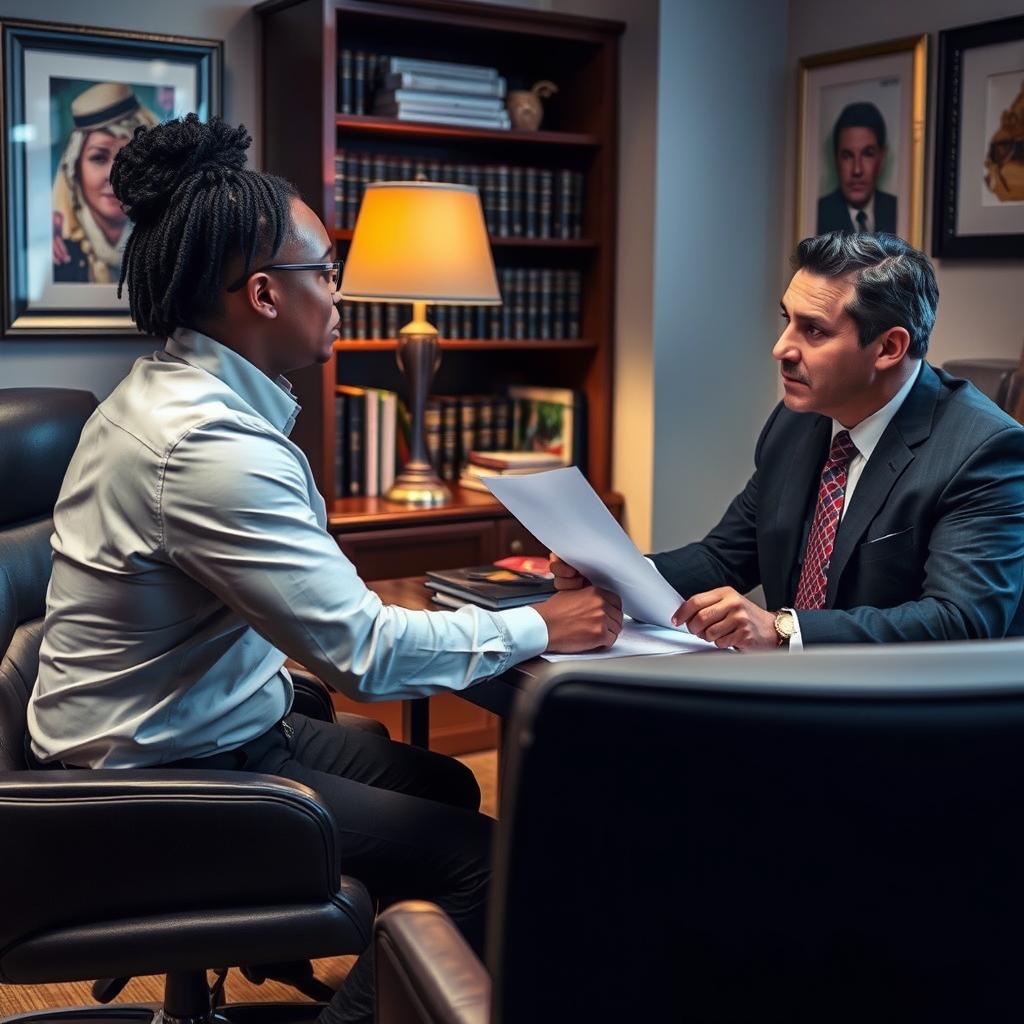
Graffiti Defense Lawyer Wesley Heights, DC
You left your Wesley Heights apartment for an evening walk along Cathedral Avenue, and suddenly a police officer is asking about fresh paint on a wall you walked past ten minutes ago. You had nothing to do with it, but now you are being told you will be charged with defacing property. A graffiti charge in the District is not a small matter — it can mean a permanent criminal record, fines, and even time in custody. You do not have to navigate this by yourself. Mr. Sris and his Of Counsel team at Law Offices Of SRIS, P.C. represent people facing graffiti and property-damage allegations in Wesley Heights and throughout Washington, D.C. Call (888) 437-7747 to request a consultation. Law Offices Of SRIS, P.C. – Advocacy Without Borders.
What Happens After a Graffiti Arrest in Wesley Heights, DC
Graffiti-related cases in the District fall under the criminal damage-to-property statutes in D.C. Code Title 22. A person can be charged with a misdemeanor or a felony depending on what the government says the damage is worth, whose property was involved, and whether the accused has a prior record. For a Wesley Heights resident, the case will be heard at the D.C. Superior Court, Criminal Division, at 500 Indiana Avenue NW. That courthouse sits at Judiciary Square, roughly 4.5 miles from the Arlington’s Arlington location, which regularly serves Wesley Heights clients.
The process usually starts with an arrest — or a citation — and an appearance before a judge. The United States Attorney’s Office for the District of Columbia (USAO‑DC) prosecutes the matter, not a local district attorney. D.C. Does not use cash bail; instead, the Pretrial Services Agency, a federal agency, evaluates your background and recommends whether you should be released pending trial. That evaluation can influence everything that follows, so having an attorney at the earliest stage is critical. Mr. Sris and his Of Counsel frequently appear at the D.C. Superior Court and understand how the Pretrial Services Agency process works. They work to protect your record, challenge the government’s evidence, and pursue the most favorable outcome possible under the circumstances. Results may vary.
Frequently Asked Questions
What exactly is graffiti under D.C. Law?
Graffiti is charged as destruction of property or defacing property under D.C. Code, and it covers any markings, inscriptions, or paint applied without the owner’s consent. The government does not need to prove permanent damage; even temporary markings can support a charge. The charge can be elevated if the damage value is high or if the alleged act targets government property, a place of worship, or certain other locations. Because the line between a misdemeanor and a felony often turns on the damage valuation, a thorough review of the government’s estimate is an important part of the defense. Reach Law Offices Of SRIS, P.C. at (888) 437-7747 to discuss the specifics of your matter.
Is graffiti a felony in Washington, D.C.?
A graffiti charge can be a felony if the property damage is valued above a statutory threshold or if the accused has prior convictions that trigger an enhanced classification. Most first-offense graffiti cases involving modest damage are prosecuted as misdemeanors, but the government retains the discretion to charge a felony. The consequences of a felony conviction are severe and can include prison time. An experienced attorney evaluates the prosecutor’s valuation and looks for weaknesses in the evidence before any plea decision is made. To speak with Mr. Sris and his Of Counsel about your pending charge, call (888) 437-7747.
What should I do immediately after a graffiti arrest in Wesley Heights?
Do not discuss the case with anyone except your lawyer, and do not post about it on social media. Anything you say to an officer or a cellmate can be used against you. Call a lawyer as soon as you are permitted. If you are released, write down everything you remember — where you were, who you were with, whether you had paint or spray cans on you, and exactly what the officer said. This information is vital to building a defense. For immediate legal guidance, reach Mr. Sris and his Of Counsel at (888) 437-7747.
Who prosecutes graffiti cases in D.C.?
Criminal cases in the District, including graffiti, are prosecuted by the United States Attorney’s Office for the District of Columbia (USAO‑DC), not by a local district attorney. D.C. Is a federal enclave, so even local-code offenses fall under federal prosecution authority. The case is heard at the D.C. Superior Court, Criminal Division, at 500 Indiana Avenue NW. Having a lawyer who understands the federal prosecution culture and the Superior Court’s procedures is essential. Law Offices Of SRIS, P.C. Regularly appears before USAO‑DC prosecutors on behalf of clients from Wesley Heights and elsewhere in the District.
How does a graffiti case move through the D.C. Superior Court?
After an arrest, the defendant goes before a judge for a presentment hearing, typically within 24 hours. If the case is a misdemeanor, it proceeds to arraignment and then a status hearing, with trial set a few months out. Felony cases generally require a preliminary hearing and a grand jury indictment before trial. At each stage, the defense attorney may negotiate with the prosecutor, file motions to suppress evidence, or challenge the sufficiency of the government’s case. The timeline varies by docket congestion and case complexity. For a detailed walk‑through of your particular situation, call (888) 437-7747.
Can a graffiti charge be dropped or dismissed?
Yes, graffiti charges can be dismissed if the government cannot prove its case beyond a reasonable doubt, if the evidence was obtained unlawfully, or if the prosecutor agrees to drop the charge as part of a resolution. Sometimes a first‑time defendant may qualify for a diversion program that, upon successful completion, results in dismissal. In other instances, the defense may show that the damage valuation is inflated or that the defendant was misidentified. Every case is different; speak with an attorney about whether your charge may be eligible for dismissal. Mr. Sris and his Of Counsel have handled many property‑damage cases in D.C. And can evaluate your options.
Will a graffiti conviction show up on my record?
A conviction for graffiti becomes part of your permanent criminal record and can appear on background checks for employment, housing, and professional licenses. D.C. Does allow record sealing under D.C. Code § 16‑803 for certain eligible convictions after a waiting period; acquittals and dismissals may be sealed sooner. A lawyer can advise you about your eligibility and, if you are not yet convicted, work to avoid a conviction in the first place. Protecting your record starts early. Contact Law Offices Of SRIS, P.C. at (888) 437-7747 to discuss your situation.
What are the penalties for damaging property with graffiti?
Penalties range from fines to incarceration, and they increase if the damage value is high or if the defendant has a record. A simple misdemeanor graffiti charge can result in a fine and up to 180 days in jail, while a felony destruction‑of‑property offense carries a potential prison sentence of up to ten years. The court also may order restitution to the property owner. Because the consequences depend heavily on the specific facts and the defendant’s history, it is important to have an attorney who can argue for the most favorable resolution. For a confidential evaluation of your case, call (888) 437-7747.
Do I need a lawyer for a first‑time graffiti charge in Wesley Heights?
You are not required by law to have a lawyer, but representing yourself in a criminal case is risky because the prosecutor is an experienced federal attorney who handles these matters every day. An attorney can spot evidentiary problems, negotiate with the government, and protect your record. Even if you think the charge is minor, a conviction can have lasting consequences. Mr. Sris and his Of Counsel offer consultations to discuss your case and explain your options. To request a consultation, call (888) 437-7747.
What if I was just in the wrong place at the wrong time?
If you were misidentified or did not commit the act, you may have a strong defense that the prosecution cannot prove you caused the damage. The government must prove identity beyond a reasonable doubt. A defense attorney may investigate whether there is surveillance video, eyewitness testimony, or physical evidence linking you to the graffiti. If the identification is weak, the attorney may move to dismiss at the appropriate stage. For guidance on challenging identification in your Wesley Heights case, contact Mr. Sris and his Of Counsel at (888) 437-7747.
How do I find the right criminal defense attorney in Wesley Heights?
Look for an attorney who practices regularly in the D.C. Superior Court, understands the USAO‑DC prosecution style, and has experience with property‑damage and graffiti cases. Verify the lawyer’s bar admissions — the District requires a D.C. Bar license — and ask about their track record with similar charges. Law Offices Of SRIS, P.C. Includes attorneys admitted in the District of Columbia who appear routinely at the D.C. Superior Court. Mr. Sris, a former prosecutor, and his Of Counsel team bring extensive combined legal experience to graffiti defense. Results may vary. Call (888) 437-7747 to schedule a consultation.
About Mr. Sris and His Of Counsel Team
Mr. Sris, Owner and Founder of Law Offices Of SRIS, P.C., is a former prosecutor who has practiced since 1997. He and his Of Counsel team — experienced attorneys who handle criminal matters in the District of Columbia and beyond — bring extensive combined legal experience. Mr. Sris testified before the Virginia House Courts of Justice Committee in support of 2019 HB 635 (chief patron Del. David Bulova). His Of Counsel include attorneys admitted in the District of Columbia who appear at the D.C. Superior Court. For your graffiti charge in Wesley Heights, call (888) 437-7747 to speak with a member of the firm.
Related pages: Washington, D.C. Criminal Defense | Georgetown Criminal Lawyer | Spring Valley Criminal Lawyer | Cleveland Park Criminal Lawyer | Chevy Chase Criminal Lawyer
Attorney advertising. Prior results do not guarantee a similar outcome.
Results may vary.
Case results depend on a variety of factors unique to each case.