
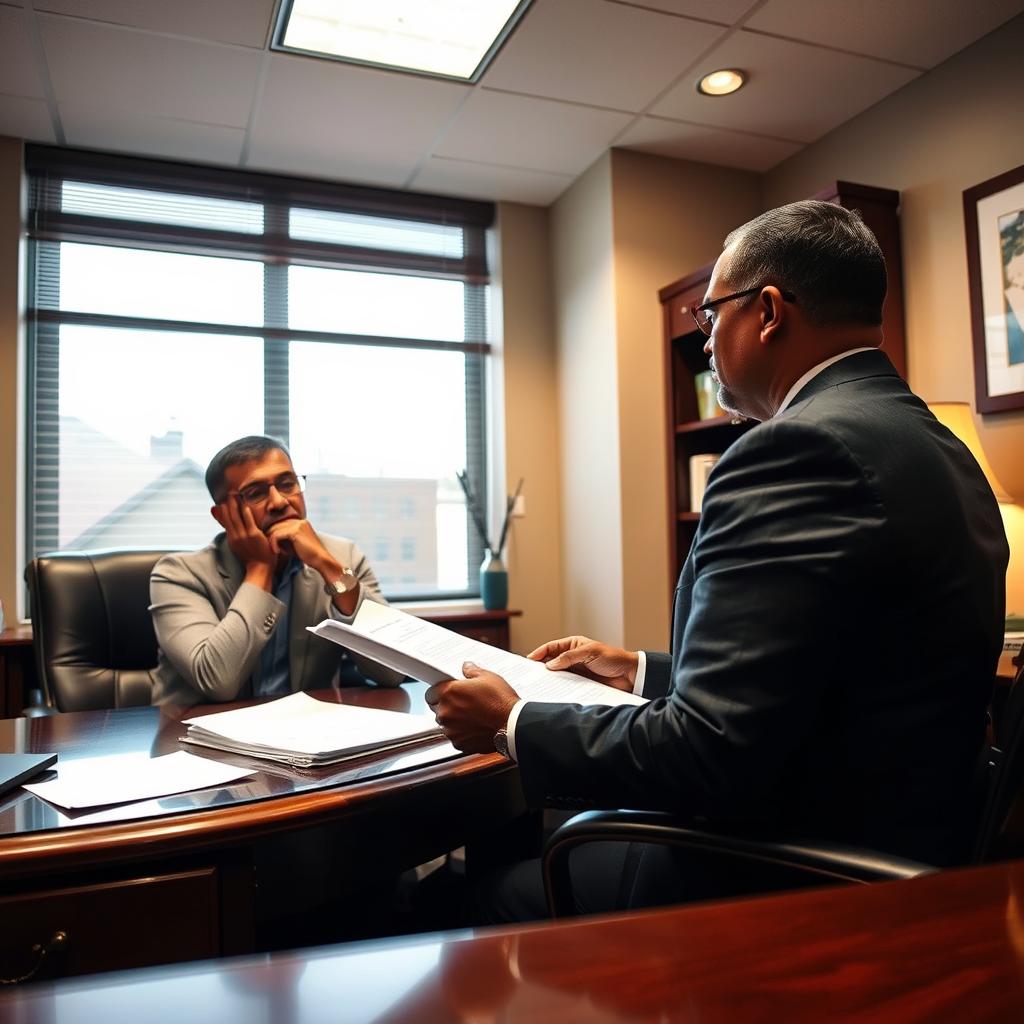
Forgery Defense Lawyer Columbia Heights, DC
Facing a forgery charge in the Columbia Heights neighborhood of Washington, D.C., puts you on a federal-law track where local crimes are prosecuted by the United States Attorney’s Office for the District of Columbia at D.C. Superior Court. Forgery—whether involving checks, contracts, identification documents, or public records—is a felony-level offense with consequences that can disrupt your professional license, security clearance, immigration status, and future employment. The procedural landscape is distinct: D.C. Does not use cash bail but instead relies on the Pretrial Services Agency to assess risk and recommend release conditions, and cases move through a unique federal-local hybrid system. An arrest near the intersection of 14th and Irving, or anywhere in Columbia Heights, initiates a process where post-arrest statements, warrant execution, and evidence-handling all demand early scrutiny. Law Offices Of SRIS, P.C., founded in 1997, defends clients in D.C. Superior Court and works to challenge every element the government must prove—from intent to defraud to the authenticity of the allegedly forged instrument. Mr. Sris, a former prosecutor, and the firm’s Of Counsel bring collective experience across the District’s criminal courts to mount a disciplined defense. To discuss the specific facts of your matter, call (888) 437-7747. Law Offices Of SRIS, P.C. – Advocacy Without Borders.
What Criminal Defense Means in Columbia Heights, DC
In Columbia Heights, a criminal charge—including forgery—is handled through D.C. Superior Court, located at 500 Indiana Avenue NW near Judiciary Square Metro (Red Line). The court’s Criminal Division processes cases where the United States Attorney’s Office for the District of Columbia serves as the prosecuting authority, not a locally elected district attorney. This federal-prosecution model means that a forgery defendant faces an office with substantial resources, and the pretrial phase is shaped by a system that uses the Pretrial Services Agency (PSA) rather than a cash‑bail schedule. PSA conducts a risk assessment and recommends release conditions to the judge, which can range from personal recognizance to GPS monitoring or stay‑away orders.
The neighborhood’s proximity to major transit corridors and mixed residential‑commercial density generates a high volume of police contacts, and arrests sometimes occur after a series of events that touch residents, local businesses, and financial institutions. A forged document presented at a bank branch on 14th Street or an altered identification used during a routine stop can trigger an investigation that crosses into federal fraud statutes. Because D.C. Is not a state, the jury pool draws from the District’s diverse demographic, and pretrial procedures follow D.C. Code and D.C. Superior Court Rules of Criminal Procedure—distinct from the Federal Rules or those of neighboring Virginia and Maryland. Understanding how the U.S. Attorney’s Office prioritizes fraud cases and how the court’s calendar management affects case pacing is critical to developing an effective defense. Mr. Sris and his Of Counsel have appeared in D.C. Superior Court on behalf of clients from Columbia Heights and the surrounding neighborhoods, working to identify procedural and evidentiary weak points early.
How Mr. Sris and His Of Counsel Handle Criminal Defense Cases
When a forgery charge originates in Columbia Heights, the defense begins with an immediate review of the charging instrument and the arrest report. Mr. Sris and his Of Counsel examine whether law enforcement had probable cause to seize the allegedly forged document, whether any search or seizure exceeded the bounds of the warrant or an applicable exception, and whether the item can be challenged as inadvertently obtained in violation of protocol. In D.C., the government must prove beyond a reasonable doubt that the defendant, with intent to defraud, uttered or possessed a falsely made or altered writing that is of legal significance. This means every link in the chain—from the document’s creation to its presentation—can be challenged. The firm’s former prosecutor perspective helps anticipate how the U.S. Attorney’s Office will structure its case, which witnesses and attorneys it may call, and where the evidentiary gaps are most likely to appear.
Throughout the process, the firm engages in pre‑indictment advocacy when possible, filing motions to suppress or dismiss when the facts warrant, and negotiating with prosecutors to seek charge reduction or dismissal. If a trial is necessary, the defense is built around testing the authenticity and chain of custody of the document, challenging handwriting or forensic analysis, and presenting any evidence that the defendant lacked fraudulent intent. For clients who have no prior criminal record, the firm explores every available alternative disposition, including deferred sentencing agreements and diversion programs, that could minimize the long‑term impact of a forgery conviction on employment and licensure. Each case is approached with a strategy tailored to the statutory framework of the D.C. Code and the practice of D.C. Superior Court.
About Mr. Sris and His Of Counsel Team
Mr. Sris, Owner and Founder of Law Offices Of SRIS, P.C., has practiced since 1997 and is admitted in Virginia, Maryland, the District of Columbia, New Jersey, and New York. As a former prosecutor, he understands how the government builds a forgery case and knows where the vulnerabilities lie. Mr. Sris testified before the Virginia House Courts of Justice Committee in support of 2019 HB 635 (chief patron Del. David Bulova). His hands‑on approach to complex criminal defense includes working directly with the firm’s Of Counsel, who bring extensive trial experience and are admitted to practice in D.C. Courts. Mr. Sris and his Of Counsel bring extensive combined legal experience. Results may vary. The firm’s Arlington location serves D.C. Clients in Columbia Heights and throughout the District, offering consultations by appointment and accessibility through the (888) 437-7747 phone line, answered 24 hours a day, every day.
Frequently Asked Questions
Who prosecutes criminal cases in Washington, D.C.?
Criminal cases in D.C. Are prosecuted by the United States Attorney’s Office for the District of Columbia, not a local district attorney. Because the District of Columbia is federal territory, local crimes under District of Columbia law—including forgery—are prosecuted by federal prosecutors at D.C. Superior Court. All cases are heard at 500 Indiana Avenue NW. The Pretrial Services Agency handles release recommendations instead of a cash‑bail system. Law Offices Of SRIS, P.C. has obtained favorable outcomes in D.C. Criminal matters, including dismissals. Results may vary. For guidance about your specific situation, reach the firm at (888) 437-7747.
Does DC have cash bail?
No, the District of Columbia does not use a cash‑bail system. Instead, the Pretrial Services Agency, a federal agency, conducts a risk assessment and recommends release conditions to the judge. Most defendants are released without posting money. The court may impose conditions such as supervision, drug testing, or stay‑away orders depending on the assessed risk and the nature of the charge. Cases are heard at D.C. Superior Court, where Mr. Sris and his Of Counsel appear on behalf of clients. Record‑sealing remedies may be available under D.C. Code § 16‑803 for qualifying dispositions. To discuss the release process after a forgery arrest, call (888) 437-7747.
Can I get my DC criminal record sealed?
Yes, D.C. Law permits record sealing under certain circumstances. Under D.C. Code § 16‑803, acquittals, dismissals, and qualifying convictions may be eligible for sealing after applicable waiting periods. The eligibility rules have been expanded for certain marijuana offenses, but for forgery and other felony matters, the analysis depends on the final disposition and the time elapsed since completion of the sentence. Petitions to seal are filed with D.C. Superior Court, and the court considers the petitioner’s rehabilitation and the interests of justice. An experienced attorney can evaluate whether your forgery case qualifies and guide you through the process. For a consultation, reach Law Offices Of SRIS, P.C. at (888) 437-7747.
What is forgery under Washington, D.C. Law?
Forgery in the District of Columbia generally means making, altering, or using a false writing with intent to defraud or deceive another person. The offense is prosecuted under the D.C. Code and can cover checks, contracts, public records, identification documents, prescriptions, and other instruments of legal significance. The government must prove that the defendant knew the document was false and intended for someone else to rely on it to their detriment. Because forgery is typically a felony, a conviction can lead to incarceration, a fine, and collateral consequences affecting employment and professional licenses. The specific charge and sentence depend on the value involved and the nature of the document. A well‑prepared defense explores every available challenge to the document’s authenticity and the defendant’s intent.
Do I need a lawyer for a forgery charge in Columbia Heights, DC?
Yes, securing experienced legal representation early gives you the trusted opportunity to protect your rights and build an effective defense. A forgery charge in D.C. Carries serious consequences, and the U.S. Attorney’s Office will push for accountability. A lawyer can immediately move to secure your release through the Pretrial Services Agency process, preserve evidence, interview witnesses, and file pretrial motions. Without counsel, you risk making statements that can be used against you or missing deadlines that affect your case. The firm’s familiarity with D.C. Superior Court procedure and the federal‑prosecution model helps ensure your defense is navigated with care. Call Law Offices Of SRIS, P.C. at (888) 437-7747 to discuss your case.
Primary Sources
For authoritative information on forgery and criminal procedure in the District of Columbia, consult the following official resources:
- D.C. Code Title 22 — Criminal Offenses and Penalties
- D.C. Superior Court — Criminal Division
- United States Attorney’s Office for the District of Columbia
Attorney advertising. Prior results do not guarantee a similar outcome. Results may vary.
Case results depend on a variety of factors unique to each case.