
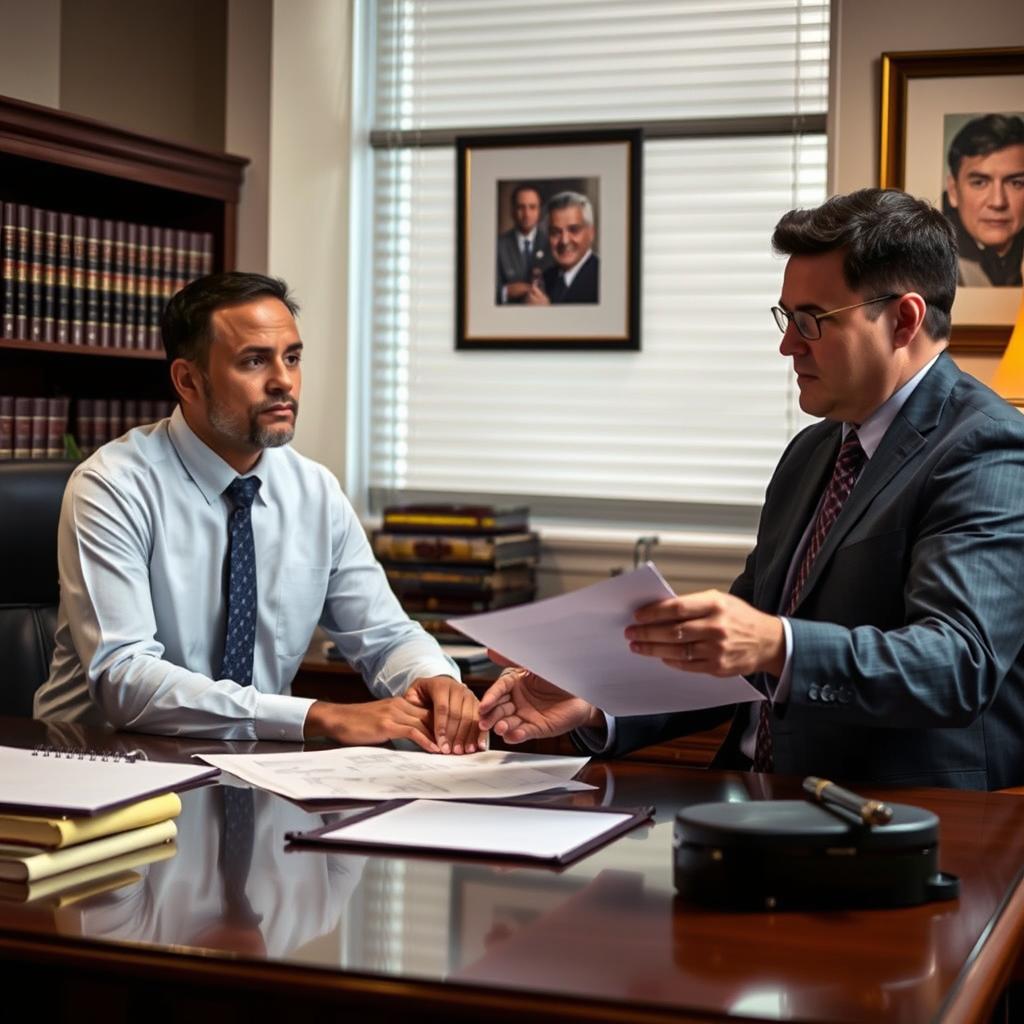
Drug Possession Lawyer Columbia Heights, DC
If you are facing a drug possession charge in the Columbia Heights neighborhood of Washington, D.C., the legal process may feel unfamiliar and intimidating. Drug offenses in the District are prosecuted by the United States Attorney’s Office for the District of Columbia, not a local district attorney, and they are heard in the DC Superior Court at 500 Indiana Avenue NW—a courthouse that is roughly three miles from our Arlington location. This unique federal-local hybrid system means that a charge arising from a stop along 14th Street or near the Columbia Heights Metro station can carry consequences that extend well beyond the immediate penalty. Law Offices Of SRIS, P.C. has practiced criminal defense since 1997, and Mr. Sris and his Of Counsel team are experienced in representing individuals in DC Superior Court. We concentrate on building a thorough defense that addresses the specific circumstances of each case. To discuss your situation, reach Law Offices Of SRIS, P.C. at (888) 437-7747. Law Offices Of SRIS, P.C. – Advocacy Without Borders.
What Drug Possession Means in Columbia Heights
Columbia Heights sits within a jurisdiction where the criminal code—found in Title 22 of the DC Code—governs possession of controlled substances. Understanding how that code interacts with local enforcement is the first step toward a sound defense. Law enforcement activity in the neighborhood, including patrols conducted by the Metropolitan Police Department, may lead to charges that proceed through the DC Superior Court’s Criminal Division. Because the United States Attorney’s Office prosecutes these cases using federal resources, the procedural landscape differs from what a defendant might encounter in a state court system.
One important point of local context is that marijuana possession of up to two ounces is legal for adults 21 and older in the District, and broader reforms have largely decriminalized possession of small amounts of other drugs for personal use. However, possession of controlled substances such as cocaine, heroin, methamphetamine, or unauthorized prescription medications—especially in quantities that suggest an intent to distribute—can still lead to felony charges. A charge in Columbia Heights may stem from a stop near the intersection of 14th Street and Irving Street, from a search in a residence, or from an encounter at the Columbia Heights Metro station. Each set of facts requires individualized analysis by defense counsel familiar with the DC court system.
Because Columbia Heights borders neighborhoods like Mount Pleasant, Park View, and Petworth, cases sometimes involve overlapping jurisdictions or witnesses from across the city. Our firm appears in DC Superior Court for clients from all corners of the District, and we know the court’s procedures, the role of the Pretrial Services Agency in release decisions, and the practical rhythms of criminal case management in the city. We work to identify every issue—from the legality of the initial stop to the handling of evidence—that may affect the outcome of a drug possession matter.
How Mr. Sris and His Of Counsel Handle Drug Possession Cases
When a client engages Law Offices Of SRIS, P.C. on a drug possession matter, the first step is a careful review of the police report, arrest documentation, and any search or seizure that led to the charge. Mr. Sris and his Of Counsel team examine whether law enforcement had reasonable suspicion or probable cause at each stage of the encounter. If constitutional issues are present, a motion to suppress evidence may be filed, potentially limiting the prosecution’s case. We also review laboratory testing procedures, chain-of-custody records, and any statements made by the defendant to determine whether they were obtained lawfully.
In DC Superior Court, drug possession cases are often resolved through a combination of negotiation and litigation. The firm presents mitigating facts about the client’s background, employment, and community ties to seek a favorable resolution—whether that is a dismissal, a diversion program, or a charge reduction. DC offers first-offender and deferred-sentencing options in certain circumstances, and we assess whether a client qualifies for any alternative disposition. Throughout the process, we maintain open communication with the client so that each decision is informed. The goal is to resolve the matter in a way that protects the client’s record and future while holding the government to its burden of proof.
About Mr. Sris and His Of Counsel Team
Mr. Sris, Owner and Founder of Law Offices Of SRIS, P.C., has practiced criminal defense since founding the firm in 1997. A former prosecutor, he brings insight into how charges are built and prosecuted. Mr. Sris is admitted to practice in Virginia, Maryland, the District of Columbia, New Jersey, and New York, and he has handled criminal matters at DC Superior Court for decades. His background includes testifying before the Virginia House Courts of Justice Committee in support of 2019 HB 635 (chief patron Del. David Bulova), a legislative effort that became part of Virginia’s equitable distribution framework.
Mr. Sris works alongside a dedicated group of Of Counsel attorneys who concentrate in criminal defense and related areas. The team has extensive experience challenging evidence, negotiating with federal prosecutors, and trying cases before judges. For drug possession matters in Columbia Heights, the firm’s collective knowledge of DC procedure—including the Pretrial Services Agency’s role and the record-sealing remedies available under DC law—forms the backbone of a strategic defense. Every case receives thorough attention, and the firm’s approach is to leave no procedural or factual angle unexamined.
Frequently Asked Questions
Who prosecutes criminal cases in Washington, D.C.?
Criminal cases in DC are prosecuted by the United States Attorney’s Office for the District of Columbia, not a local district attorney. DC is a federal district, so local crimes under the DC Code are handled by federal prosecutors. Cases are heard at DC Superior Court at 500 Indiana Avenue NW, Washington, DC 20001. The unique hybrid system means that while the prosecutor is federal, the court procedures are those of a local trial court. The Pretrial Services Agency, rather than a cash bail system, determines pretrial release conditions. This structure can affect everything from plea negotiations to the availability of diversion programs.
Does DC have cash bail?
No, DC does not use cash bail. Instead, the Pretrial Services Agency—a federal agency—assesses each defendant’s risk and recommends release conditions to the court. Most individuals are released without posting any money. The decision is based on factors such as community ties, prior record, and the nature of the charge. For a drug possession charge in Columbia Heights, an experienced attorney can present information to PSA and the court that supports a recommendation for release on recognizance or with minimal conditions. This system gives defendants an opportunity to remain in the community while their case is pending.
Can I get my DC criminal record sealed?
Yes, DC law allows record sealing under DC Code § 16-803 for acquittals, dismissals, and certain convictions after a waiting period. Marijuana offenses have expanded sealing eligibility, and other qualifying offenses may be sealed if the statutory requirements are met. Sealing petitions are filed with the DC Superior Court, and the process involves demonstrating eligibility and serving notice on the prosecutor. Sealing a record can improve employment and housing prospects by limiting public access to the case file. The availability and timeline of sealing depend on the specific outcome of the case and the applicable waiting period.
What should I do if I am arrested for drug possession in Columbia Heights?
If you are arrested, you have the right to remain silent and to request an attorney. Politely decline to answer questions until you have spoken with counsel. Do not consent to any search beyond what is required. Write down the details of the encounter as soon as possible. Contact an experienced criminal defense lawyer who handles cases at DC Superior Court. An attorney can intervene early—sometimes before the initial court appearance—to preserve evidence, challenge the basis of the arrest, and begin building a defense strategy. Time is important, so seek legal guidance promptly.
Do I need a lawyer for a drug possession charge in DC?
While you are not required to have a lawyer, the absence of counsel can put you at a significant disadvantage. A drug possession charge may result in a criminal record, jail time, or other collateral consequences. An attorney examines the legality of the stop and search, negotiates with the prosecutor, and identifies diversion or deferred-sentencing options that might not be offered without advocacy. Even a charge for a small amount of a controlled substance can affect immigration status, professional licenses, or security clearances. Legal representation helps protect your rights and explores every possible avenue for a favorable resolution.
How long does a criminal case take in DC?
The timeline varies depending on the complexity of the case, the court’s calendar, and whether a plea agreement is reached. A misdemeanor drug possession case may be resolved in a few months, while a felony case—particularly one involving potential distribution charges—can take much longer. Pre-trial motions, competency evaluations, and scheduling conflicts can extend the process. At our firm, we work to move the case forward efficiently while ensuring that no legal issue is overlooked. A reasonable estimate depends on the specifics of the charge and the positions of the parties.
For further guidance on your situation, reach Law Offices Of SRIS, P.C. at (888) 437-7747.
Columbia Heights Criminal Defense Resources
Areas we serve include related neighborhoods:
Criminal defense in Washington, D.C.,
Georgetown criminal lawyer,
Cleveland Park criminal defense,
Chevy Chase DC criminal attorney,
drug possession lawyer Spring Valley.
Official primary sources:
DC Superior Court |
DC Code Title 22 (Criminal Offenses) |
U.S. Attorney’s Office for the District of Columbia
Attorney advertising. Prior results do not guarantee a similar outcome.
Results may vary.
Case results depend on a variety of factors unique to each case.