
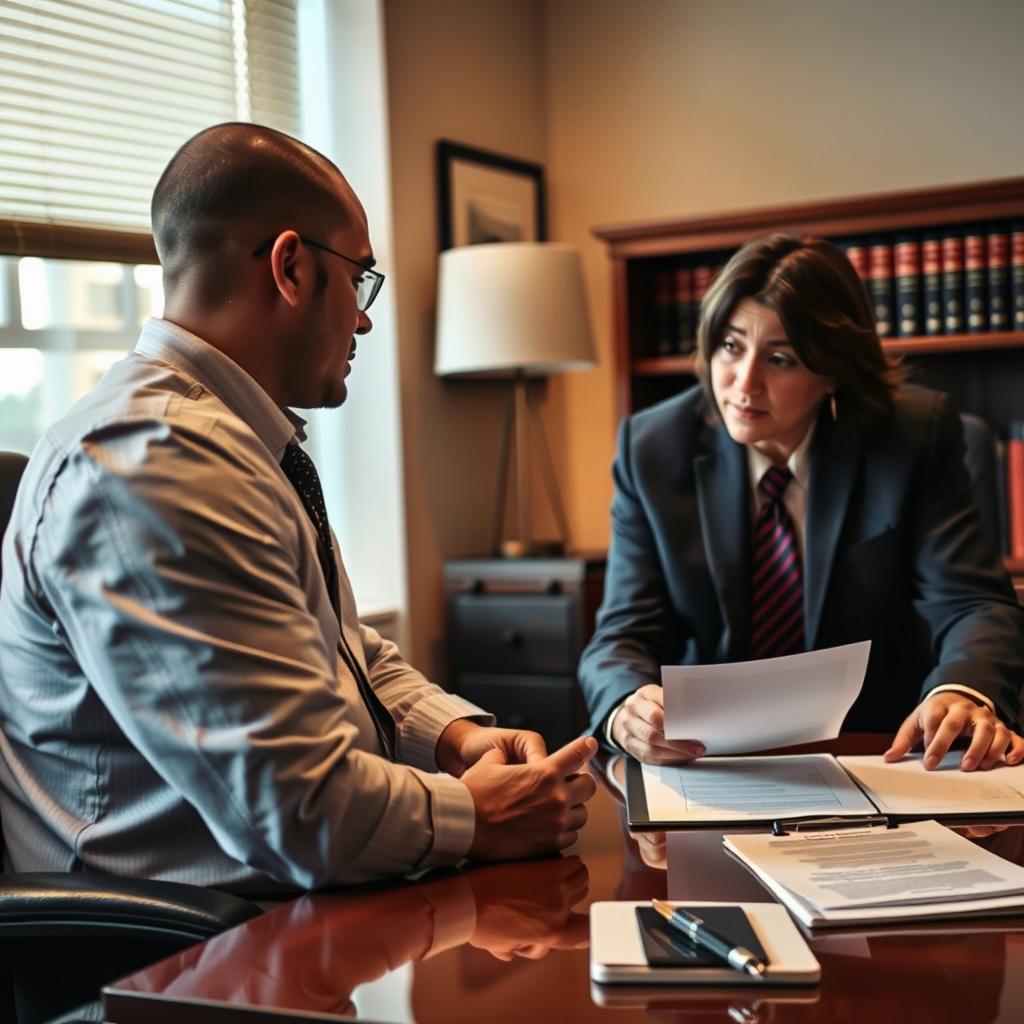
Murder Defense Lawyer Washington DC
When a person faces a murder charge in Washington, D.C., the stakes could not be higher. Murder prosecutions in D.C. Are handled by the United States Attorney’s Office for the District of Columbia – a federal prosecutor – not a local district attorney. Cases are heard at the DC Superior Court, Criminal Division, located at 500 Indiana Avenue NW. Because D.C. Operates under a unique federal/local hybrid jurisdiction, the procedural and evidentiary landscape is unlike any other city. A conviction can bring decades or even a life sentence, and the collateral consequences are profound. Law Offices Of SRIS, P.C., founded in 1997, represents individuals accused of murder in Washington, D.C. Mr. Sris and the firm’s Of Counsel attorneys bring extensive combined legal experience to these serious matters. To request a consultation, call (888) 437-7747. Law Offices Of SRIS, P.C. – Advocacy Without Borders.
What Murder Defense Means in Washington, D.C.
Murder is the most serious criminal charge in the District of Columbia. Homicide offenses are governed by D.C. Code Title 22, and the prosecution’s case is built by experienced Assistant United States Attorneys who draw on federal investigative resources. Unlike most states, D.C. Has no cash bail system; instead, the Pretrial Services Agency, a federal entity, conducts risk assessments and recommends release conditions. A person charged with murder may be held without bond or under restrictive pretrial supervision while the government prepares its case.
Because D.C. Is not a state, local criminal prosecutions proceed under D.C. Code but are litigated by federal prosecutors. This creates a prosecution environment with substantial resources and a high conviction rate. The Metropolitan Police Department handles arrests and investigations, often working in tandem with federal agencies. Defendants face a criminal justice system that integrates components of both federal and local practice. Understanding the interplay of D.C. Code offenses, federal procedural rules, and the specific judicial temperament of the DC Superior Court is critical for a defense strategy. Mr. Sris and the firm’s Of Counsel attorneys are familiar with this unique structure and how it affects murder cases.
DC Superior Court Court hours: Mon-Fri 8:30AM-5:00PM. Counsel appearing on criminal matters should plan filings accordingly.
How Mr. Sris and the Firm’s Of Counsel Attorneys Handle Murder Defense Cases
A murder defense begins the moment a person becomes a suspect or is arrested. The firm’s approach is immediate, thorough, and grounded in decades of criminal trial experience. Early action – securing evidence, interviewing witnesses, and engaging forensic experts – can shape the course of the entire proceeding. Mr. Sris, a former prosecutor, understands how the government builds a murder case and uses that insight to identify weaknesses in the prosecution’s evidence. The firm’s Of Counsel attorneys, who include experienced trial lawyers with backgrounds in complex felony defense, work alongside Mr. Sris to develop a strategy tailored to the client’s specific circumstances.
The process involves challenging the admissibility of evidence, scrutinizing the chain of custody, evaluating eyewitness identifications, and, when appropriate, presenting alternative narratives to the jury. If the evidence supports it, the defense may argue self‑defense, mistaken identity, or an insufficient showing of the required intent. The firm also engages in thorough plea negotiations when a resolution short of trial is in the client’s best interest, though every case is prepared as if it will go to verdict. Throughout the process, the client and their family are kept informed and involved in key decisions. Law Offices Of SRIS, P.C. represents clients in the DC Superior Court and is prepared to take a case to trial when necessary.
About Mr. Sris and the Firm’s Of Counsel Attorneys
Mr. Sris is the Owner and Founder of Law Offices Of SRIS, P.C. A former prosecutor, he has been practicing law since 1997 and is admitted in Virginia, Maryland, the District of Columbia, New Jersey, and New York. Mr. Sris testified before the Virginia House Courts of Justice Committee in support of 2019 HB 635 (chief patron Del. David Bulova). His prosecutorial experience, combined with over two decades of defense work, gives him a dual perspective that informs every case the firm handles.
The firm’s Of Counsel attorneys are independent practitioners who contract directly with Law Offices Of SRIS, P.C. They bring significant litigation experience, including backgrounds in complex felony defense, forensics, and trial advocacy. On murder defense matters, Mr. Sris and the firm’s Of Counsel attorneys collaborate to provide a thorough and coordinated defense. The firm has served clients throughout Washington, D.C., and has documented favorable outcomes in criminal matters, including a dismissal in a DC criminal case. Results may vary.
Frequently Asked Questions
Who prosecutes murder cases in Washington, D.C.?.
Criminal cases in D.C., including murder, are prosecuted by the United States Attorney’s Office for the District of Columbia, not a local district attorney. Because D.C. Is a federal territory, crimes under the D.C. Code are prosecuted by federal prosecutors. All cases are heard at the DC Superior Court, 500 Indiana Avenue NW. This means the prosecution has access to federal resources, and the case is handled by Assistant United States Attorneys who may have experience litigating both local and federal matters.
What are the possible penalties for a murder conviction in Washington, D.C.?
Murder convictions in the District of Columbia carry severe penalties, including decades in prison or a life sentence. First‑degree murder is the most serious form of homicide, and the exact punishment depends on the circumstances of the offense, the defendant’s criminal history, and any aggravating or mitigating factors presented to the court. Because D.C. Operates under a unique statutory framework, sentencing can be complex. A person convicted of murder also faces lifelong collateral consequences, such as restrictions on employment, housing, and civil rights.
How does a lawyer defend against a murder charge in D.C.?.
A defense attorney challenges the prosecution’s evidence, raises legal defenses, and works to protect the defendant’s rights at every stage. In a murder case, the attorney will investigate the facts, examine the credibility of witnesses, retain forensic experts when necessary, and file motions to suppress unlawfully obtained evidence. Possible defenses include self‑defense, mistaken identity, lack of intent, or insufficient evidence to prove guilt beyond a reasonable doubt. The attorney also negotiates with the prosecutor to seek a reduction or dismissal of charges when the evidence supports it.
Does D.C. Use cash bail for murder charges?.
No. D.C. Uses the Pretrial Services Agency, a federal agency, to assess risk and recommend release conditions — not traditional cash bail. For serious charges like murder, a defendant may be held without bond or placed under strict pretrial supervision. The PSA evaluates factors such as the severity of the offense, the defendant’s ties to the community, and flight risk. An attorney can present arguments to the court regarding release conditions and work to secure the most favorable pretrial status available under D.C. Law.
Can a murder charge be reduced or dismissed?.
Yes, a murder charge can be reduced or dismissed if the prosecution’s evidence is weak, new facts emerge, or legal grounds for dismissal exist. A defense attorney may file a motion to dismiss for lack of probable cause, violations of the defendant’s constitutional rights, or insufficient indictment. In some cases, the charges may be amended to a lesser homicide offense, such as manslaughter, if the facts do not support a murder conviction. Every case is fact‑specific, and the outcome depends on the evidence and the skill of the defense.
What is the difference between murder and manslaughter in D.C.?.
Murder typically requires a showing of malice or intent to kill, while manslaughter involves a killing that occurs without malice, such as in the heat of passion or due to reckless conduct. First‑degree murder is a premeditated, deliberate killing; second‑degree murder involves an intent to kill or inflict serious bodily injury without premeditation. Manslaughter, on the other hand, may be voluntary (committed in a sudden quarrel or in the heat of passion) or involuntary (caused by criminal negligence). The distinction can mean a difference of decades in a potential sentence.
How long does a murder trial take in D.C.?.
The length of a murder trial varies depending on case complexity, the number of witnesses, and the court’s schedule, but felony cases often take months from indictment to trial. In D.C., the Speedy Trial Act and local rules require the case to move forward without unreasonable delay, but pretrial motions, mental competency evaluations at St. Elizabeths Hospital, and discovery disputes can extend the timeline. A skilled attorney uses this time to build the strong $1.
Do I need a lawyer if I am under investigation for murder but not yet charged?.
Yes, anyone who is the subject of a murder investigation should retain an attorney immediately, even before charges are filed. Law enforcement may try to question you, execute search warrants, or gather evidence that could be used against you later. An attorney can communicate with investigators on your behalf, protect your rights, and prevent you from making statements that could be misconstrued. Early legal intervention can influence whether charges are brought and, if so, what those charges will be.
What should I do if a family member is arrested for murder in Washington, D.C.?.
Contact an experienced criminal defense attorney as soon as possible, do not discuss the case with anyone, and make sure the arrested person asks for a lawyer before speaking to law enforcement. The first hours after an arrest are critical. Statements made to police or cellmates can be used as evidence. An attorney can appear at the initial court presentment, argue for release conditions, and begin investigating the case immediately. The firm accepts calls 24 hours a day and can provide guidance on the next steps.
Can a D.C. Murder conviction be appealed?.
Yes, a person convicted of murder in D.C. Has the right to appeal to the District of Columbia Court of Appeals. An appeal is not a retrial; it is a review of the trial court’s decisions for legal errors, such as incorrect jury instructions, improper admission of evidence, or insufficient evidence to support the verdict. If the appellate court finds reversible error, it may order a new trial, modify the sentence, or, in rare cases, dismiss the charge. Post‑conviction relief may also be available in certain circumstances.
How do I choose a murder defense lawyer in Washington, D.C.?.
Look for an attorney with extensive experience in serious felony trials, familiarity with the DC Superior Court, and a track record of handling homicide cases. Because D.C. Prosecutions are conducted by federal prosecutors, a lawyer who understands both local and federal criminal procedure can be an advantage. You should also consider whether the attorney is available to devote the necessary time to your case, communicates clearly, and has a support team that can assist with investigation and trial preparation. Mr. Sris and the firm’s Of Counsel attorneys bring decades of combined experience to murder defense and are available to discuss your situation.
For a consultation, reach Mr. Sris and the firm’s Of Counsel attorneys at (888) 437-7747.
Attorney advertising. Prior results do not guarantee a similar outcome.
Case results depend on a variety of factors unique to each case.