
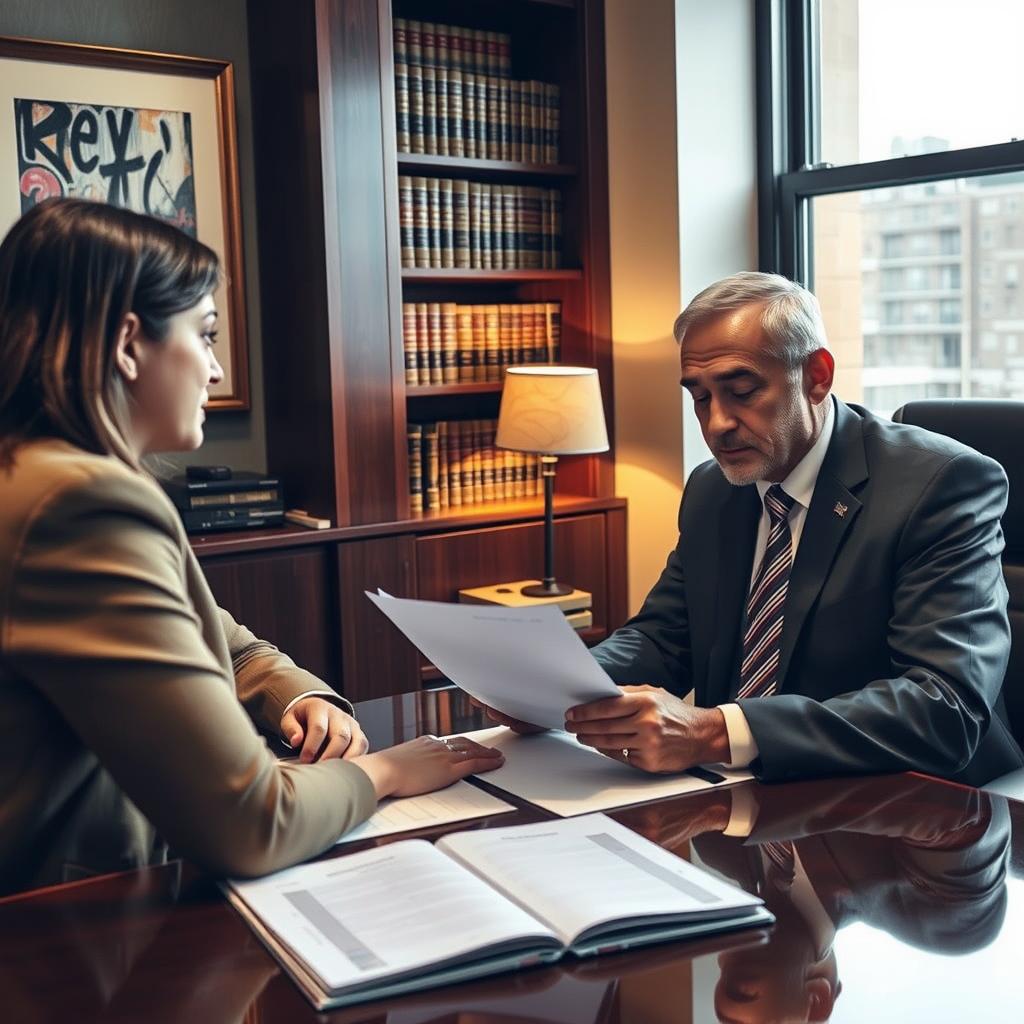
Graffiti Defense Lawyer Foggy Bottom, DC
A graffiti charge in Washington, D.C., can carry serious consequences, including a criminal record and potential jail time.
If you or a family member are facing an accusation of defacement, tagging, or related property damage in the Foggy Bottom
neighborhood—home to George Washington University, the U.S. Department of State, and the Kennedy Center—you need a defense
team that understands how the District’s unique criminal justice system works. Law Offices Of SRIS, P.C., founded in 1997,
represents clients across the District of Columbia. Mr. Sris and his Of Counsel bring extensive combined legal experience
to graffiti and property-damage defense, appearing in the DC Superior Court at 500 Indiana Avenue NW.
To discuss your situation, reach Law Offices Of SRIS, P.C. at (888) 437-7747.
Law Offices Of SRIS, P.C. – Advocacy Without Borders.
What Graffiti Defense Means in Foggy Bottom, DC
In the District of Columbia, graffiti—commonly referred to as defacing public or private property—falls under D.C. Code
Title 22, the criminal offenses code. Unlike most American cities, Washington, D.C., operates under a hybrid federal-local
jurisdiction: criminal charges are prosecuted not by a local district attorney but by the United States Attorney’s Office
for the District of Columbia (USAO-DC). That means a graffiti charge in Foggy Bottom will be handled by a federal
prosecutor in the DC Superior Court Criminal Division.
Foggy Bottom’s dense urban landscape—with its university buildings, federal offices, embassies, and historic
rowhouses—creates a high-visibility environment for any property-tagging allegation. The Metropolitan Police Department
(MPD) frequently patrols the area, and reports of defacement can trigger investigations that lead to criminal charges.
Depending on the extent of the damage and the value of the property affected, graffiti may be charged as a misdemeanor
or, when the damage exceeds a statutory threshold, as a felony. The potential penalties range from fines and community
service for minor offenses to incarceration for more serious cases. Mr. Sris and his Of Counsel are familiar with the
nuances of DC criminal practice, including the role of the Pretrial Services Agency—a federal agency that handles release
decisions in lieu of cash bail—and the availability of record-sealing under D.C. Code § 16-803 for qualified cases.
How Mr. Sris and His Of Counsel Handle Graffiti Cases
When a potential client contacts us about a graffiti charge in Foggy Bottom, the first step is a thorough review of the
allegations: What evidence exists? Were there witnesses, surveillance footage, or statements to police? Our team examines
the procedural history, including whether the arrest complied with legal requirements and whether any search or
questioning respected constitutional protections. Mr. Sris, a former prosecutor, brings insight into how the charging
authority builds its case; his Of Counsel, which includes attorneys admitted in DC, add deep courtroom experience.
From the initial hearing at the DC Superior Court, we work to secure the client’s release under the least restrictive
Pretrial Services Agency recommendations—since DC does not use cash bail for most offenses—and begin developing a
defense strategy. This may involve challenging the identification of the accused, disputing the nature or extent of the
damage, or negotiating with the Assistant United States Attorney to seek a reduction or dismissal of the charge. Where
appropriate, we explore diversion or deferred-prosecution options that can prevent a permanent conviction. If the case
goes to trial, Mr. Sris and his Of Counsel present a well-prepared defense focused on achieving a favorable outcome.
Every case is different, and the timeline depends on the court’s calendar and the complexity of the evidence;
consulting an experienced attorney early can help protect your record and future opportunities.
About Mr. Sris and His Of Counsel Team
Mr. Sris, Owner and Founder of Law Offices Of SRIS, P.C., established the firm in 1997 and is admitted to practice in
Virginia, Maryland, the District of Columbia, New Jersey, and New York. His background as a former prosecutor gives him
a distinctive perspective on how charging decisions are made and how the government approaches criminal cases. Mr. Sris
testified before the Virginia House Courts of Justice Committee in support of 2019 HB 635 (chief patron Del. David
Bulova). He and his Of Counsel—experienced attorneys engaged through Excella—collectively concentrate their practice on
criminal defense, including graffiti and other property-damage charges, throughout the DC metropolitan area. Mr. Sris
and his Of Counsel have documented favorable outcomes in DC criminal matters. Results may vary. In your case.
Frequently Asked Questions
Who prosecutes a graffiti charge in Washington, D.C.?
Graffiti charges in Washington, D.C., are prosecuted by the United States Attorney’s Office for the District
of Columbia (USAO-DC), not a local district attorney. Because the District is a federal territory, local
criminal offenses under D.C. Code are handled by federal prosecutors in the DC Superior Court Criminal Division at
500 Indiana Avenue NW. The USAO-DC assigns Assistant United States Attorneys to specific cases, and the Pretrial
Services Agency—rather than a cash-bail system—makes release recommendations. This unique structure means that
defense counsel must understand both local law and federal prosecution practices.
Does DC have cash bail for graffiti offenses?
No, the District of Columbia does not use cash bail for graffiti or other criminal offenses. DC has
operated without a cash-bail system since 1992. Instead, the Pretrial Services Agency (PSA)—a federal agency—conducts
a risk assessment after arrest and recommends conditions of release, which may include supervision, drug testing, or
stay-away orders. Most defendants are released on personal recognizance; those deemed a higher risk may face pretrial
detention after a hearing. An attorney can present information to the court to argue for the least restrictive conditions
appropriate to the case.
Can I get a graffiti charge sealed from my record in DC?
Yes, many graffiti charges can be sealed from your record in the District of Columbia under D.C. Code
§ 16-803. Record-sealing (often called expungement) is available for acquittals, dismissals, and, after
certain waiting periods, for qualifying convictions. Misdemeanor graffiti may become eligible for sealing after a
set number of years without further offenses. The petition is filed with the DC Superior Court, and a judge decides
after considering factors such as the nature of the offense and the petitioner’s subsequent record. An attorney can
help navigate the eligibility requirements and prepare the motion.
Do I need a lawyer for a graffiti charge in Foggy Bottom?
While you are not legally required to hire a lawyer, retaining experienced defense counsel for a graffiti
charge can meaningfully affect the outcome. Even a seemingly minor vandalism case carries the potential for
jail time, fines, and a permanent criminal record that may impact employment, educational opportunities, and
professional licenses. An attorney can evaluate the evidence, identify defenses, negotiate with the prosecutor, and,
if appropriate, seek diversion or sealing relief. The earlier a lawyer is involved, the more options may be available.
What are the possible penalties for graffiti in D.C.?
Penalties for graffiti in Washington, D.C., depend on the value of the damage and the defendant’s prior
record. A minor defacement charged as a misdemeanor can result in up to 180 days in jail and a fine. If the
damage is substantial—exceeding the statutory felony threshold—the charge may be elevated to a felony, carrying a
longer prison term and more severe collateral consequences. The court may also impose restitution to the property
owner and community service. Each case is fact-specific, and a knowledgeable defense can make a difference in
sentencing.
For guidance on your specific situation, reach Law Offices Of SRIS, P.C. at (888) 437-7747.
Visit these official resources for additional information:
D.C. Code Title 22 – Criminal Offenses
DC Superior Court
United States Attorney’s Office for the District of Columbia
Practice-area pages serving the DC metropolitan area:
Washington, D.C. Criminal defense attorneys |
Georgetown criminal defense lawyer |
Dupont Circle criminal defense lawyer
Attorney advertising. Prior results do not guarantee a similar outcome.
Results may vary.
Case results depend on a variety of factors unique to each case.